
Various Artists - A Century of Strings, Stories & Songs: A Tribute to The Delmore Brothers
Billy Blue Records
****1/2
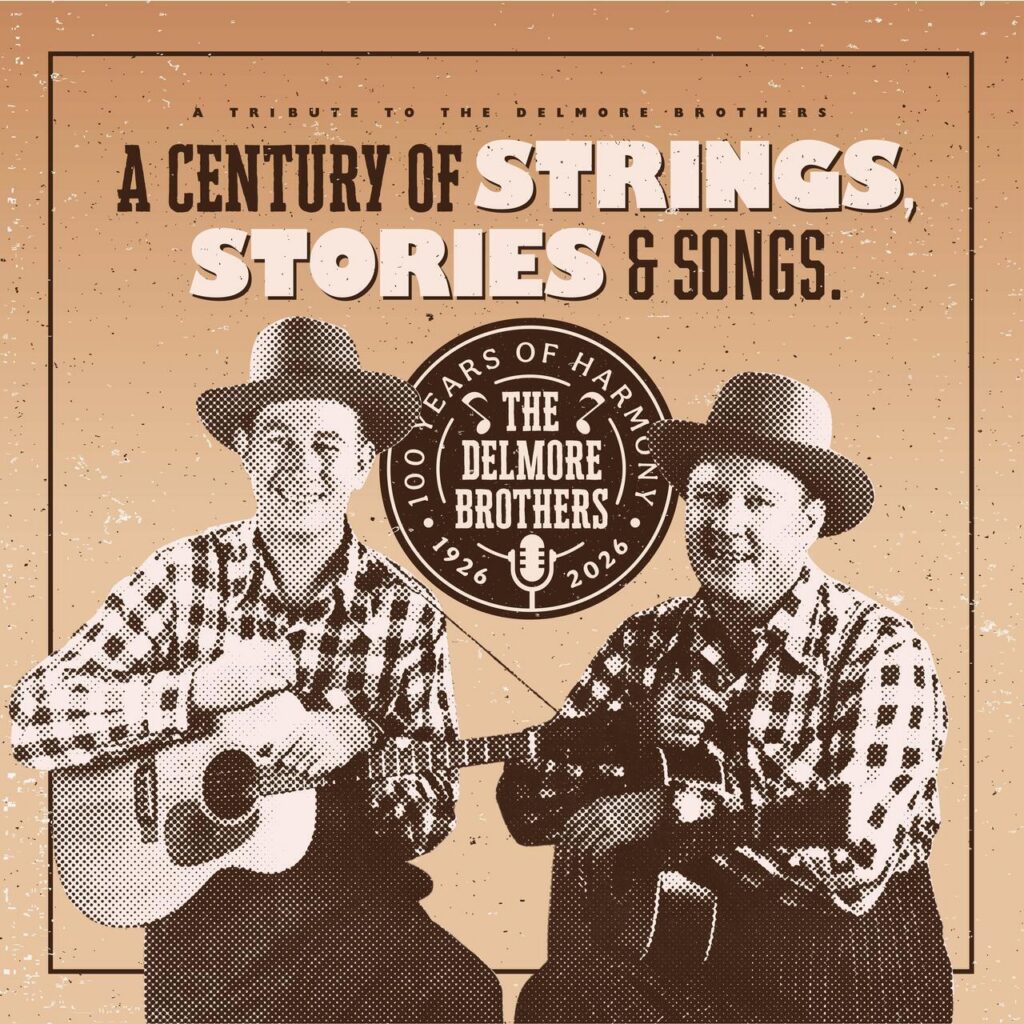
Produced by bluegrass legend Jerry Salley and featuring a plethora of contemporary bluegrass singers and musicians, this superb collection celebrates the 100th anniversary of when the Delmore Brothers first performed publicly at a Fiddle Contest in Alabama in 1926.
It is an affectionate exploration of vintage styles that feels fresh and offers a potent reminder of how much great music of the past awaits rediscovery. Sadly, in the annals of Country Music, down through the decades, the Delmores have been unfairly overlooked, though they were deservedly inducted into the Country Music Hall of Fame in 2001. I first became aware of their music in the mid-1960s when I bought a second-hand copy of the Louvin Brothers’ A TRIBUTE TO THE DELMORE BROTHERS album. Released in 1960, over the years, it’s probably been one of my most-played albums and led me to investigating the Delmore Brothers extensive catalogue of recordings.
The Delmore Brothers (Alton and Rabon) were probably the most distinctive of all the brother acts that proliferated hillbilly music during the 1930s and 1940s. From the outset they were performing their own original material, which was mainly written by Alton, although his younger brother was also a competent writer. An early success came in 1933 with Brown’s Ferry Blues, for RCA’s Bluebird label.
Their down-to-earth lyrical concerns addressed commonplace struggles and lost love with grace and redeeming, good-natured humour, rarely resorting to maudlin tears. The music emphasised their beautiful soft harmonies, accomplished guitar picking, and strong original compositions. Unusually for that time (or any other), the Delmores would switch high and low harmony parts from song to song (or even within the same song), although Alton would usually sing lead. They were at their best on tender or bittersweet ballads, upbeat or sombre blues and traveling/railroad numbers. They were among the few early traditional country acts to change with the times, and pioneer some of those changes. Forerunners of the 1950s rock'n'roll explosion, they expertly blended traditional country, boogie and blues into a distinctive sound that was often imitated, but rarely equalled. In 1946 they expanded from their acoustic two-piece arrangements into full-band backup, with bass, mandolin, steel guitar, fiddle, harmonica, and additional guitars. Some of those additional guitars were supplied by Merle Travis, who credited Alton Delmore as a key influence. This led to chart success with Freight Train Boogie, Blues Stay Away From Me (a number one in 1949) and Pan American Boogie. They teamed up with Travis and Grandpa Jones to form the gospel quartet the Brown’s Ferry Four, a popular radio and recording act. The Delmore Brothers came to a premature end when Rabon became seriously ill with lung cancer and passed away on December 4, 1952. Alton worked as a postman and salesman before dying on June 9, 1964 from a liver disorder due to his heavy drinking. They left behind an incredible music legacy as this heartfelt tribute demonstrates. with one of the best examples of innovative traditional string band/bluegrass music heard this year.
Traditionally, hillbilly duets and string band music most often catered for dancing; and while there’s plenty of cause for dancing here, much of this music explores themes far deeper than a quickstep. The joy in the Grascal’s rendition of Will You Be Lonesome Too? combines the swing of a country dance with the fervour of bluegrass vocals, serving as a reminder that country blues is not only an expression of pain, but a means of overcoming the pain. Field Hand Man features Wood Box Heroes on a classic working man’s song. The guys give it a bluesy treatment, driven by low tuned banjo, sawing fiddle and super smooth harmony vocals. The last time I heard anyone play Blue Railroad Train was the Tony Rice Outfit many years ago. After hearing Bradley Walker & Ricky Skaggs play this song, their version is possibly more sedate, but maybe more in keeping with the sad vibe of the lyrics.
The Malpass Brothers’ aching reading of Put Me On the Trail To Carolina is outstanding, as is Doyle Lawson & Jerry Salley’s delightful take on When It’s Time For The Whippoorwill To Sing. More stellar duets abound, including Trey Hensley & Del McCoury with their toe-tapping Gonna Lay Down My Old Guitar, Marty Raybon & Jimmy Fortune with a chunky I’ve Got The Big River Blues with fine interplay between fiddle and mandolin and Darin and Brooke Aldridge and an exquisite rendition of Sweet, Sweet Thing with the legendary Charlie McCoy adding some of his masterful harmonica. Riders In the Sky put an impeccable Western spin on The Fugitive’s Lament and young Alex Miller and fiddle player Carson Peters create a dynamic version of Hillbilly Boogie that feels like it’s going to explode by the climax. Appalachian Road Show tap into the power of gospel music with Bound For The Shore, which floats a second-line rhythm propelled by driving acoustic guitar and mandolin; it’s a joyous celebration.
This is a project that captures the essence of old-time duo singing and bluegrass music wonderfully. By the time the music stopped, and through every subsequent playing, I’ve had a different feeling. Gratitude that they came together to make this music in the first place, and that this recording will always be available to serve as a lasting monument to what once was.
September 2026